

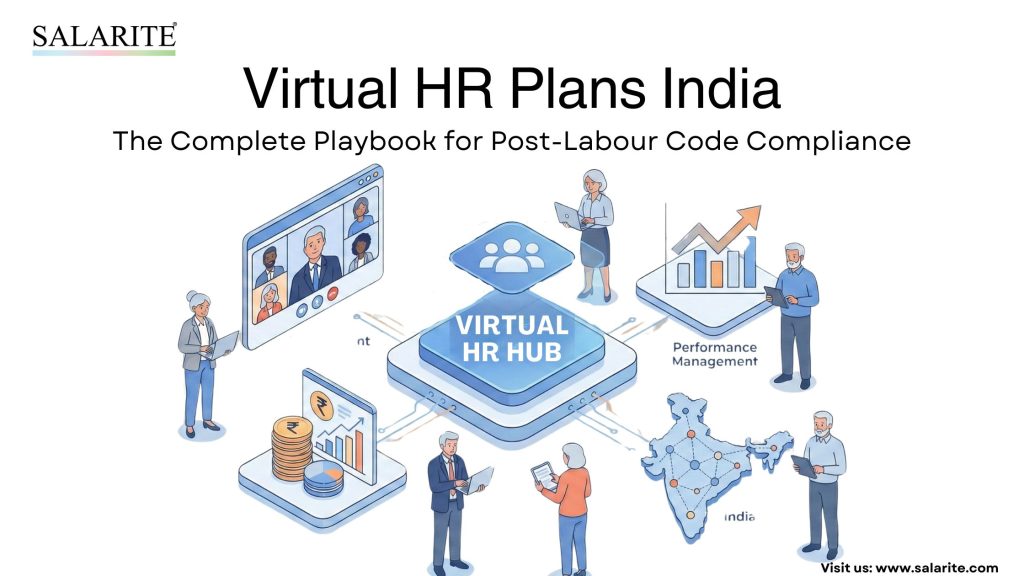
India’s new labour code framework has fundamentally transformed how organizations manage workforce compliance. With four unified labour codes replacing the fragmented 44+ labour laws, businesses now face a critical compliance deadline. The shift has sparked unprecedented demand for Virtual HR Plans India that simplify regulatory navigation without straining budgets. Small and mid-sized enterprises are particularly turning to Virtual HR Plans India as Affordable Virtual HR solutions to bridge the compliance gap efficiently. Cost-Effective HR Services have emerged as the strategic choice for organizations seeking expert compliance oversight without the overhead of full-time HR departments.
This playbook serves as a step-by-step guide to understanding, implementing, and maintaining compliance through modern Virtual HR Plans India delivery models. By the end of this article, you’ll have a comprehensive roadmap to ensure your organization meets every post-labour code requirement while optimizing operational costs through Virtual HR Plans India strategies.
Understanding India’s New Labour Codes
India’s new labour code environment introduces significant structural changes for employers nationwide. The four major codes—Code on Wages, Code on Industrial Relations, Code on Social Security, and Code on Occupational Safety, Health and Working Conditions—consolidate complex regulations into clearer frameworks. For small and mid-sized businesses, this transition means revisiting foundational HR processes: wage calculations, statutory deductions, leave policies, contractor classifications, and safety protocols.
Key areas of change affecting organizations:
- Wage structure reorganization and allowance reclassification under the Code on Wages
- Revised provident fund and gratuity calculations impacting payroll infrastructure
- Updated definitions of contract and gig workers requiring classification audits
- Enhanced workplace safety and occupational health documentation mandates
- Modified overtime and working hours regulations demanding immediate policy updates
- Stricter penalty provisions making non-compliance costly and reputationally damaging
The urgency for compliance has intensified as regulatory authorities intensify inspections and penalty enforcement. Organizations relying on traditional HR Outsourcing Packages now require vendors with specialized post-labour code expertise. Why has compliance become mission-critical? Penalties range from ₹10,000 to ₹5 lakh per violation, with potential criminal liability for repeat offenses. Moreover, non-compliance exposes organizations to employee disputes, litigation risks, and operational disruptions. The stakes demand proactive, structured compliance strategies—precisely what modern Virtual HR Plans India deliver.
Explore more – Hire employees quickly with our streamlined hiring solutions that reduce time-to-recruit and help you fill critical roles faster than ever.
Why Virtual HR Plans India Are Becoming the Preferred Compliance Solution
Shift Toward Digital HR Models
The traditional in-house HR department model is increasingly incompatible with modern compliance demands. Remote HR delivery has become the industry standard, enabling organizations to access specialized expertise without geographical constraints. Virtual HR Plans India align compliance requirements with tech-enabled workflows, allowing employers to maintain real-time oversight of critical compliance metrics.
Digital HR models streamline policy implementation, automate documentation workflows, and enable seamless employee communication across dispersed teams. This technological foundation is essential for maintaining compliance in distributed work environments where manual tracking becomes impossible. Virtual HR Plans India platforms integrate with existing HRMS, payroll, and attendance systems, creating unified compliance ecosystems that reduce administrative friction.
Managing Costs Without Compromising Compliance
The financial argument for virtual HR is compelling. Hiring a full-time HR manager in India costs ₹8–15 lakh annually, plus benefits and administrative overhead. Virtual HR Plans India provide comprehensive compliance expertise at predictable, subscription-based rates—typically ₹2,000–8,000 monthly per employee, depending on organizational complexity. This cost structure enables SMEs to access enterprise-grade HR compliance without proportional budget expansion.
Predictable pricing eliminates hidden expenses associated with in-house HR infrastructure: recruitment costs, training investments, infrastructure requirements, and turnover risks. Cost-Effective HR Services deliver measurable ROI through penalty avoidance, reduced compliance-related disputes, and optimized payroll processing. Organizations can scale virtual HR support incrementally, aligning HR investment with business growth trajectories.
Compliance Oversight & Real-Time Documentation
Virtual HR Plans India teams ensure that mandated documentation and audits are maintained with precision and consistency. Compliance dashboards provide real-time visibility into policy adherence, statutory requirement fulfillment, and audit readiness. These teams conduct proactive compliance reviews, identify gaps before they become violations, and maintain detailed audit trails for regulatory inspection.
Documentation standardization across Virtual HR Plans India ensures that all employee records meet labour code requirements. From wage registers to safety documentation to contractor compliance files, virtual HR teams maintain organized, accessible compliance repositories. This systematic approach significantly reduces audit friction and demonstrates organizational commitment to regulatory compliance.
Explore more – Get Affordable Virtual HR services that simplify compliance, payroll, and hiring while saving your business up to 70% on HR costs.
The Post-Labour Code Compliance Checklist
Implementing comprehensive post-labour code compliance requires systematic attention to multiple organizational dimensions. Virtual HR Plans India provide structured frameworks addressing each compliance area. Organizations using these solutions report faster compliance achievement and superior audit readiness compared to ad-hoc compliance efforts.
Payroll Restructuring Requirements
The Code on Wages fundamentally restructures wage calculations. Employers must classify salary components into three categories: basic wages, dearness allowance, and other allowances. This restructuring affects PF contributions (based on wages up to ₹15,000 monthly), gratuity eligibility calculations, and statutory deduction methodologies.
Critical payroll compliance actions:
- Conduct comprehensive wage audits against Code on Wages standards
- Recalculate all statutory deductions (PF, ESIC, professional tax, TDS)
- Update payroll software to reflect new classification structures
- Communicate wage structure changes to all employees with detailed explanations
- Implement gratuity calculations aligned with revised wage definitions
- Create documented evidence of compliance initiatives for regulatory authorities
Contractor & Gig Worker Compliance
The new codes introduce stricter definitions distinguishing contractors, gig workers, and permanent employees. Misclassification carries substantial penalties and potential litigation exposure. Organizations with contractor-heavy workforces face particularly complex compliance requirements that Virtual HR Plans India specialists navigate effectively.
Updated contractor compliance requirements:
- Audit all contractor relationships against revised classification criteria
- Implement written contracts reflecting code-compliant terms and conditions
- Establish documented processes for contractor onboarding and verification
- Ensure contractors receive mandated safety training and equipment
- Maintain separate documentation for gig workers’ social security contributions
- Implement worksite safety protocols applicable to contractor operations
HR Outsourcing Packages must include specialized contractor compliance support, ensuring organizations avoid misclassification penalties while maintaining workforce flexibility.
Working Hours, Leave & Overtime Rules
The Code on Industrial Relations introduces standardized working hours regulations (8 hours daily, 48 hours weekly) with enhanced overtime payment requirements. Updated leave policies must comply with new statutory frameworks: casual leave, sick leave, and earned leave provisions.
Mandatory policy updates required:
- Revise working hours policies reflecting code-compliant maximum weekly hours
- Update overtime compensation structures (typically 2x basic wages for overtime)
- Create comprehensive leave policies addressing casual, sick, privilege, and earned leave
- Implement attendance tracking systems ensuring accurate overtime calculation
- Develop rostering and shift management processes respecting working hour limits
- Document all policy changes with implementation dates and employee acknowledgment
Cost-Effective HR Services provide templated policy frameworks and implementation guidance, accelerating organizational compliance without extensive HR resource allocation.
Risk Management & Penalty Avoidance
Proactive compliance audits are the most effective strategy for penalty avoidance. Regular audits identify compliance gaps before regulatory inspection, enabling corrective action before violations accrue. Virtual HR Plans India teams conduct monthly or quarterly compliance reviews, maintaining detailed documentation of corrective measures.
Comprehensive risk management approach:
- Conduct baseline compliance audits identifying current gaps
- Prioritize high-risk areas (payroll accuracy, safety documentation, contractor compliance)
- Implement corrective action plans with documented timelines
- Establish internal compliance monitoring systems for ongoing oversight
- Create escalation protocols for emerging compliance risks
- Maintain compliance records demonstrating good faith compliance efforts
Risk management through proactive auditing transforms compliance from a reactive burden to a strategic advantage, protecting organizational reputation and financial performance.
Explore more – Hire candidates online with smart digital screening, automated shortlisting, and seamless onboarding—all from one platform.
How Virtual HR Plans India Teams Implement End-to-End Compliance
Digital Policy Updates & Employee Communication
Virtual HR Plans India specialists begin compliance implementation by conducting comprehensive organizational assessments, identifying existing policies misaligned with post-labour code requirements. They develop revised policies reflecting code compliance while maintaining organizational flexibility. Importantly, policy implementation requires thoughtful employee communication preventing resistance and misunderstanding.
Implementation process:
- Draft revised policies incorporating labour code requirements
- Conduct management review ensuring operational feasibility
- Develop employee communication materials explaining policy changes and rationale
- Implement phased rollout timelines allowing workforce adaptation
- Create digital acknowledgment systems documenting employee understanding
- Establish feedback channels enabling employee questions and concerns
Compliance Dashboards & Reporting
Modern Virtual HR Plans India include compliance dashboards providing real-time insights into organizational compliance status. These dashboards track policy adherence, document completeness, audit readiness metrics, and regulatory requirement fulfillment. Executive dashboards enable leadership to understand compliance performance alongside operational metrics.
Dashboard capabilities typically include:
- Real-time policy adherence tracking across organizational levels
- Document completeness verification for all statutory requirements
- Risk score calculations highlighting high-priority compliance gaps
- Audit readiness metrics indicating preparation for regulatory inspection
- Trend analysis showing compliance trajectory over time
- Alert systems flagging emerging compliance risks
Integration with Payroll, Attendance, and HRMS Tools
Effective compliance requires seamless integration between HR systems. Virtual HR Plans India teams ensure that payroll systems accurately reflect labour code wage definitions, attendance systems capture compliant working hour data, and HRMS platforms maintain comprehensive employee documentation. Integration minimizes manual data entry errors and ensures consistency across organizational systems.
Integration priorities:
- Payroll system configuration reflecting code-compliant wage structures
- Attendance system calibration ensuring accurate overtime calculation
- HRMS database population with complete employee documentation
- Automated compliance report generation from integrated system data
- Data synchronization preventing inconsistencies across platforms
- System audit trails documenting all compliance-related changes
Virtual HR Plans India leverage these integrations to automate compliance monitoring, reducing manual oversight requirements while improving accuracy.
Ongoing Monitoring & Monthly Compliance Reviews
Compliance is not a one-time implementation but ongoing organizational discipline. Virtual HR Plans India teams conduct monthly or quarterly compliance reviews, analyzing payroll data for errors, confirming policy adherence, and verifying documentation completeness. These regular reviews identify emerging issues before they become violations.
Ongoing monitoring components:
- Monthly payroll audits verifying calculation accuracy
- Policy adherence reviews confirming organizational implementation
- Documentation audits ensuring completeness and accessibility
- Regulatory change monitoring keeping compliance current
- Penalty risk assessments identifying exposure areas
- Remediation recommendations with implementation timelines
Choosing the Right HR Outsourcing Packages for Compliance
What Should Be Included in Compliance-Focused Packages?
Evaluating HR outsourcing options requires clear understanding of compliance-focused package components. Comprehensive packages should address all post-labour code compliance dimensions, not merely payroll processing. Virtual HR Plans India solutions should include these core elements to ensure organizational success.
Essential package components:
- Comprehensive policy development and implementation support
- Quarterly or monthly compliance audits with detailed reporting
- Employee onboarding with code-compliant documentation
- Safety and labour code training programs for management and workforce
- Payroll audit services ensuring calculation accuracy
- Documentation management and archival systems
- Regulatory change monitoring and implementation support
HR Outsourcing Packages should include escalation protocols for urgent compliance issues. Organizations should verify that chosen packages include these elements rather than settling for basic payroll services misrepresented as comprehensive compliance solutions.
Tiered Pricing—Affordable Virtual HR Options for SMEs
Virtual HR service providers typically offer tiered pricing structures accommodating organizations of varying sizes and complexity. Startup-stage companies might utilize basic packages (₹2,000–3,000 per employee monthly) including payroll processing and basic policy templates. Growing SMEs often benefit from mid-tier packages (₹3,500–5,500 per employee monthly) adding compliance audits and training support. Complex organizations with specialized requirements might invest in premium packages (₹6,000–8,000+ per employee monthly) including dedicated compliance officers and custom implementation support.
Affordable Virtual HR options enable even resource-constrained organizations to access institutional-grade compliance expertise. Cost-Effective HR Services scale with organizational growth, ensuring that HR investment remains proportional to business complexity. Organizations should evaluate pricing against compliance scope rather than seeking lowest-cost options, as inadequate compliance support ultimately costs more through penalties and operational disruptions.
Questions to Ask Before Signing Up
Selecting a virtual HR provider requires thorough due diligence. Organizations should request service level agreements (SLAs) specifying response times, reporting frequency, and escalation processes. Inquire about regulatory partnerships—do providers maintain relationships with labour authorities enabling rapid guidance during inspections? Request client references from organizations similar in size and industry to your own. Verify whether providers offer legal partnerships enabling rapid legal consultation when novel compliance questions emerge. Confirm the qualifications of compliance professionals who will manage your account—do they possess relevant labour law certifications? What ongoing training ensures their knowledge remains current?
Explore more – Accelerate your high-volume recruitment with bulk hiring platforms designed to source, filter, and onboard large teams effortlessly.
Case Study: Post-Labour Code Compliance Success Story
Organization Profile: Manufacturing firm with 150 employees, multiple facilities, mix of permanent and contractor workforce
Pre-Implementation Challenges
- Inconsistent wage calculations across facilities creating compliance exposure
- Contractor classification misalignment with revised code definitions
- Documentation gaps creating audit readiness concerns
- Manual compliance tracking consuming substantial management bandwidth
Virtual HR Plans India Implementation
The organization engaged a specialized virtual HR provider offering Virtual HR Plans India to conduct baseline compliance audit. Assessment identified payroll calculation errors affecting 30% of workforce, contractor misclassifications impacting 45 workers, and significant documentation gaps across safety and working hours documentation.
60-Day Implementation Roadmap:
- Week 1–2: Baseline audit completion, gap identification, prioritization
- Week 2–3: Payroll restructuring and system configuration
- Week 3–4: Contractor reclassification and contract updates
- Week 4–5: Policy development and employee communication
- Week 5–8: Implementation monitoring, documentation consolidation, audit preparation
- Week 8–12: Monthly compliance reviews, refinement, audit readiness verification
Results Achieved
- Complete payroll calculation alignment with Code on Wages within 30 days
- Contractor reclassification reducing misclassification penalties by estimated ₹8–12 lakh annually
- 100% documentation completeness enabling confident regulatory inspection
- Monthly compliance costs of ₹3,500 per employee significantly lower than in-house HR department expenses
- Zero compliance violations during subsequent regulatory inspection
- Management time redirected from compliance administration to strategic HR initiatives
Key Success Factors:
- Leadership commitment to compliance prioritization
- Systematic, phased implementation preventing operational disruption
- Clear employee communication reducing workplace resistance
- Integration with existing payroll and attendance systems
- Ongoing monitoring and monthly reviews maintaining compliance momentum
Tools, Templates & Resources for Employers
Standardized Compliance Templates
Effective compliance implementation requires organizational access to proven templates and documentation frameworks. Virtual HR Plans India providers typically supply:
- Employee policy handbooks pre-configured for labour code compliance
- Employment contracts reflecting updated contractor classification standards
- Wage register templates conforming to Code on Wages specifications
- Leave and attendance tracking templates ensuring regulatory accuracy
- Safety documentation templates addressing occupational health requirements
- Gratuity calculation spreadsheets reflecting revised methodologies
These templates serve as implementation starting points, significantly accelerating compliance timeline and ensuring standard-of-practice documentation quality.
Payroll & Attendance Guidelines
Clear guidelines simplifying complex regulatory requirements enable accurate organizational implementation:
- Wage component classification: basic, dearness allowance, and other allowances breakdown
- PF contribution calculation including the ₹15,000 monthly salary ceiling
- Overtime payment methodologies and hour calculation standards
- Leave entitlement formulas for casual, sick, privilege, and earned leave
- Statutory deduction procedures including GST and professional tax
- Attendance tracking best practices ensuring regulatory accuracy
New Labour Code Readiness Assessment
Organizations can evaluate their current compliance status through structured assessments addressing all post-labour code requirements. Comprehensive checklists covering payroll accuracy, policy alignment, documentation completeness, contractor compliance, and safety protocols enable organizations to identify priority improvement areas and track progress toward comprehensive compliance.
Why Salarite Is the Smartest Choice for Virtual HR Plans India
As businesses across India adapt to the new labour code framework, Salarite has emerged as one of the most reliable partners for seamless, cost-effective compliance management. Designed specifically for Indian SMEs and growing enterprises, Salarite combines modern HR technology with expert compliance support to help organizations stay audit-ready without the high cost of in-house HR teams.
Salarite’s Affordable Virtual HR services simplify complex compliance tasks—from payroll restructuring to contractor documentation—ensuring every labour code requirement is met with precision. Instead of juggling multiple vendors, spreadsheets, and manual processes, organizations can rely on Salarite for end-to-end support across payroll, policy updates, safety documentation, statutory filings, and HRMS integration. Through Virtual HR Plans India expertise, Salarite transforms HR compliance into a manageable, strategic function.
How Salarite Supports Post-Labour Code Compliance
- End-to-end virtual HR support designed for India’s new labour code framework
- Expert-led wage audits, PF/ESIC recalculations, and statutory updates
- Code-compliant onboarding, contractor compliance checks, and documentation management
- Automated payroll and attendance syncing, minimizing errors and penalties
- Monthly or quarterly compliance reviews ensuring continuous adherence
- HR Outsourcing Packages tailored for startups, SMEs, and complex multi-location businesses
With predictable pricing and enterprise-grade expertise, Salarite gives organizations the confidence to pass inspections, avoid penalties, and build compliant workplaces without straining budgets. For businesses prioritizing compliance, efficiency, and affordability, Salarite is the ideal partner in India’s evolving HR landscape. Salarite’s Virtual HR Plans India empower organizations to achieve sustained compliance excellence.
How Salarite Simplifies Compliance for SMEs Across India
For small and mid-sized businesses, navigating India’s new labour codes can be overwhelming. Salarite bridges this gap by offering Affordable Virtual HR solutions that make compliance simple, structured, and stress-free. SMEs no longer need to hire full-time HR teams or rely on outdated outsourcing models—Salarite provides expert compliance support at a fraction of the cost.
What SMEs gain with Salarite:
- A dedicated virtual HR manager overseeing all compliance tasks
- Immediate alignment of policies, payroll, and documentation with new labour codes
- Automated statutory filings and audit-ready documentation
- Zero dependency on internal HR bandwidth
Salarite ensures SMEs stay compliant and penalty-free while keeping HR costs predictable and manageable through Virtual HR Plans India delivery models.
Salarite’s Technology-Driven Compliance Engine
Unlike traditional HR outsourcing vendors, Salarite combines expertise with automation. Its tech-enabled HR systems ensure accuracy, consistency, and transparency across all compliance activities.
Key capabilities include:
- Integrated HRMS with payroll, attendance, and statutory compliance
- Automated alerts for PF, ESIC, TDS, and labour code updates
- Digitized policy deployment with employee acknowledgment tracking
- Centralized documentation repository for quick audit access
This technology-first approach reduces human error, minimizes delays, and keeps your organization always prepared for inspections. Salarite transforms compliance from a manual burden into a streamlined, automated process. Through Virtual HR Plans India, organizations achieve sustained compliance excellence without operational disruption.
Why Salarite Is the Future of Virtual HR in India
Salarite’s HR Outsourcing Packages are built specifically for the post-labour code era. As organizations need more accuracy, more documentation, and more timely updates, Salarite provides structured HR solutions that scale with business growth.
What sets Salarite apart:
- Built for India’s regulatory environment
- HR experts trained in labour law, payroll, contractor compliance, and audits
- Transparent pricing with no hidden fees
- Continuous support through monthly compliance reviews
- Tailored solutions for startups, SMEs, and growing enterprises
For any business looking to stay compliant, save costs, and streamline HR operations, Salarite delivers unmatched value through advanced Virtual HR Plans India excellence.
Salarite Virtual HR Plans
Salarite provides clear, results-driven subscription plans designed to match your business size, goals, and budget.
Startup Plan – ₹9,999/month (50% OFF): Perfect for small teams that need a fast, reliable HR setup. You get a dedicated HR expert handling hiring, onboarding, and employee support — completely virtual for one full month.
Custom Virtual HR Plan – ₹ On Request: Built for growing businesses that need advanced HR support. This plan offers flexible service duration with a dedicated HR professional managing complete end-to-end people operations.
Every plan is structured to deliver guaranteed value — ensuring your investment directly improves HR efficiency and employee satisfaction.
Conclusion
The post-labour code compliance environment demands systematic, structured organizational approaches transcending traditional ad-hoc compliance efforts. Virtual HR Plans India provide the institutional framework, technological infrastructure, and specialized expertise enabling organizations to navigate this complex landscape efficiently. The combination of compliance rigor, operational efficiency, and cost optimization makes virtual HR models the strategic choice for forward-thinking organizations prioritizing both regulatory adherence and financial performance.
Affordable Virtual HR solutions democratize access to enterprise-grade compliance expertise previously available only to large organizations with substantial HR investment capacity. Cost-Effective HR Services deliver measurable value through penalty avoidance, reduced compliance-related disputes, optimized payroll processing, and strategic HR time redirection. Rather than viewing compliance as a burden or cost center, organizations should recognize it as a competitive advantage—demonstrating stakeholder commitment to regulatory adherence, employee welfare, and organizational stability.
Organizations seeking to transform their compliance posture should explore comprehensive HR Outsourcing Packages specifically designed for post-labour code requirements. The choice between in-house compliance management and virtual HR delivery should prioritize expertise, consistency, and alignment with organizational resources and strategic priorities. In India’s evolving regulatory landscape, Virtual HR Plans India represent the gold standard for compliance excellence, operational efficiency, and organizational growth. Businesses implementing Virtual HR Plans India emerge stronger, more compliant, and better positioned for sustainable success.